


How to Request a Refund from a Dentist Without Escalating Conflict
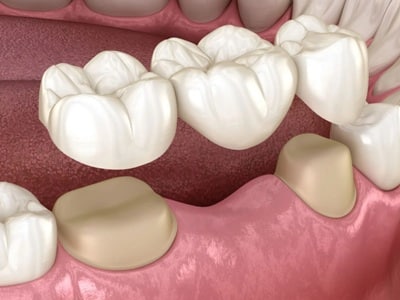
My dentist is in-network with Cigna. He said he would pull my broken upper tooth and place a 4-unit bridge from #7 to #10. We paid $2,100 out of pocket after insurance.
When I returned for the bridge, he didn’t extract the tooth. Instead, he performed a root canal and stitched the gum tissue over the root. I asked him to submit a pre-authorization to insurance. He resisted at first but finally agreed.
Six months later, I learned the bridge won’t be covered at all. Insurance says too many upper teeth are already missing—two molars on the right and the front tooth—and another molar on the left needs extraction. Now the dentist says I owe an additional $1,000.
He offered a refund, but only if we sign a release stating we won’t hold him responsible for any future issues with #9. The temporary flipper has broken twice, and he wants $650 for it unless we sign.
I’m not sure what to do. Should I agree to that? – Thanks. J.L. from PA
JL,
It sounds like your dentist may be concerned about potential liability. You will benefit by staying calm and shifting the conversation toward resolution rather than confrontation.
If you decide to pursue a refund, handle it directly and professionally. You don’t need to threaten or argue. You simply need to be clear about your position and your boundaries.
Here is a practical way to frame the discussion:
- Let him know you would prefer to resolve this without legal action.
- State that you are willing to accept a refund to close the matter.
- Explain that you are not comfortable signing a legal release.
- Clarify that if a refund is not provided, you will explore your legal options.
This keeps the tone measured while making your expectations clear.
What About the Broken Flipper?
If the dental flipper has already broken twice, it would be very difficult for the office to justify collecting additional payment for it. Repeated failures of the appliance weaken the case for charging you again.
You don’t need to spend much energy debating that portion. Focus instead on resolving the broader issue.
Are There Other Options?
Insurance companies and licensing boards take patient complaints seriously, particularly when professionalism or quality of care is questioned.
If you choose to mention these options to your dentist, do so calmly. You might explain that you would prefer not to involve:
- Your dental insurance provider (such as Cigna)
- The state dental board
Mention this as a last resort—not a threat. Your goal is to encourage a fair resolution, not to escalate tension.
Dr. Thaddeus Michalski, a Hartford, Connecticut, dentist, sponsors this post. Read why many of his patients say he is one of the best dentists in town.
Is a Six-Tooth Bridge Safe for Replacing My Missing Front Teeth?
Is a six-tooth dental bridge safe for replacing my missing front teeth? My dentist recommended a six-tooth bridge that connects two of my teeth with two dental implants. The bridge will replace my right front tooth and the one behind it. This doesn’t sound like a good idea, but I have no basis for saying it. I feel comfortable. What questions should I ask before agreeing to the bridge? – Thanks. Josef from NV
Josef,
When replacing missing teeth, your dentist may suggest connecting dental implants to natural teeth in a single bridge. This approach can sound efficient, but it’s not always the simplest or healthiest option. Understanding the differences between teeth and implants can help you make an informed decision about your care.
Why Use Caution When Connecting Natural Teeth and Implants?

Natural teeth connect to bone through ligaments that allow tiny amounts of movement. In contrast, dental implants fuse with the bone, making them rigid. This difference can strain the connection and may damage the supporting teeth.
While research shows that joining teeth and implants can work, it requires meticulous planning and expert technique to avoid long-term complications.
What Are the Risks of a Single Connected Bridge?
Joining your front teeth and implants into one bridge introduces several potential problems:
- If one tooth or implant fails, the entire bridge must be replaced. Keeping teeth and implants separate makes repairs easier and less expensive.
- Cleaning becomes more difficult. A connected bridge requires a floss threader or specialized cleaning tools that take more time and effort.
Many dentists recommend separating the bridge sections or using individual crowns when possible to minimize complications.
Alternative for Replacing a Missing Front Tooth
In many cases, the most practical solution is to replace the missing tooth with a single dental implant. It is strong, stable, and easy to clean. A less expensive option is a removable flipper partial denture. It’s not as durable as an implant, but it can be a budget-friendly option.
Ask your dentist to explain why he recommends a bridge that connects your natural teeth with dental implants and whether a single implant or a smaller bridge design might be healthier. You can also get a second opinion from an experienced cosmetic and implant dentist.
Dr. Thaddeus Michalski, a Rocky Hill, Connecticut dentist, sponsors this post.
My New Partial Denture Burns My Tongue
My tongue has been burning since I got a new partial denture last November. It burns beneath my tongue and on my lips. I also have bad taste. My dentist suspects a metal allergy and recommends a $4,500 bridge instead. He also gave me liquid lidocaine to numb my mouth. I know that’s not a solution, but I wanted to describe what’s happening completely. Is a dental bridge my only alternative? – Thank you. Sona from IL
Sona
You’re right. Liquid lidocaine is not a solution to the burning sensation on your tongue and lips. We are concerned with your dentist’s diagnosis and treatment options.
A skilled dentist knows the alternatives to a metal-based partial dentist. One option is the Valplast partial.
What Is a Valplast Partial Denture?
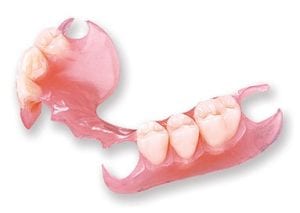
A Valplast partial denture is a denture with a thermoplastic resin framework. Thermoplastic resin is stronger and more flexible than acrylic. It may be a tooth replacement solution if you are allergic to metal-based dental restorations. Although we are unaware of allergic reactions to Valplast, it is not impossible to be allergic to it.
Ask your dentist whether you can benefit from a Valplast partial denture or another thermoplastic resin denture.
What If You’re Allergic to Your Partial Denture?
If you suspect a reaction to your partial denture, we recommend testing from an allergist. Ask your dentist about the metal content of your existing denture and the contents of alternative partial dentures, including acrylic. Nickel in dental materials is the most common allergen. Test results from the allergist can help you find a biocompatible solution.
If your dentist cannot recommend a non-metal partial denture, schedule a second opinion with an advanced cosmetic dentist to discuss your options. A dental bridge should not be necessary. Also, a bridge requires work on teeth adjacent to the missing one. Although it costs more, a dental implant is a healthier, long-lasting solution for a missing tooth. Nevertheless, a cosmetic dentist can explain your tooth replacement options after allergy testing.
Dr. Thaddeus Michalski, a Rocky Hill, Connecticut dentist and Diplomate of the International Congress of Oral Implantologists, sponsors this post.